PixAIDocs
提示詞

提示詞進階

提示詞進階技巧:構圖思維、畫面層次控制、光線與景深描述,讓 AI 繪圖作品更專業。

AI 繪圖的進階提示詞技巧 —— 構圖思維、畫面層次控制、光線與景深描述。學完提示詞基礎之後,很多人面臨的問題不再是「不會寫標籤」,而是腦子裡沒有畫面。這篇指南幫你建立構圖思維,並教你如何一步步把一張圖改得更有氛圍。需要常用標籤隨時可以翻閱提示詞速查表

由於每個模型的理解方式和風格差異較大,本頁所有範例均以 Tsubaki.2 作為示範模型,並在提示詞助手關閉的情況下生成,以準確展示原始提示詞的效果。如果你使用其他模型或開啟了提示詞助手,結果可能有所不同。


如何想像畫面

在最開始構思畫面時,先不要急著想細節,而是圍繞主題建立一個「合理存在的世界」。

整個過程其實是在不斷回答三個問題:

這個世界裡有什麼(元素)→ 正在發生什麼(動作與變化)→ 我希望觀眾看到多少(景別)

舉例:以「春天」為主題

第一步:主題 → 確定環境元素(「有什麼」)

從主題出發,列出最具代表性的場景元素。「春天」讓人聯想到花朵與草地——這是畫面的「存在基礎」,也決定了整體的情緒基調。

第二步:環境 → 推導人物狀態(「人在這裡會怎樣」)

人物如何融入這個環境?既然場景是草地,相比站立,坐下更符合春天的輕鬆氛圍。動作應從環境中自然推導出來,而不是憑空設計。

第三步:引入變化因素(讓畫面活起來)

只有靜態動作會讓畫面顯得平淡。加入「風」作為變化因素——風讓花草產生動態,也統一了畫面中的運動邏輯。一旦有風,人物的頭髮也應隨之飄動,進而引出更具體的動作:用手按住被風吹起的髮絲。此時動作不再是裝飾,而是對環境變化的合理回應,人物與場景形成了因果關係。

第四步:景別控制 → 決定資訊比例

既然希望表達「草地的寬闊感」,就需要讓環境有足夠的空間被看到,選擇 wide shot,而不是讓人物佔滿畫面。這一步本質是在做資訊分配——決定觀眾應該看到多少環境、多少人物。

Mio
Mio:

畫面構思從主題出發,先確定場景基礎,再根據環境推導人物狀態與動作,引入變化因素打破靜態,最後透過景別控制資訊比例。

如何展示畫面

展示畫面的核心要素是景別,景別決定了畫面中人物與環境的資訊比例,是構圖最基礎也最重要的決策之一。下面展示幾個常見的景別。

景別範例圖說明
無指定無指定不指定景別時,模型會自行判斷最合適的取景範圍。
中景
Medium Shot
中景取景約腰部以上,人物與環境平衡。最日常、最穩定的敘事視角,適合對話、互動或輕情緒表達。
牛仔鏡頭
Cowboy Shot
牛仔鏡頭中景的變體,保留身體動作空間又開始強調人物本身。常用來表現「角色狀態 + 一點氣場」。
寬景
Wide Shot
寬景最遠的視角,人物佔比小,環境占主導。重點不在「人」而在「人在哪裡」。適合建立場景、交代背景。
近景
Close Up
近景環境被弱化,觀眾注意力自然集中到人物的表情、眼神和動作上。
特寫
Choker Shot
特寫只保留臉部甚至局部,環境幾乎消失。作用不是講資訊,而是放大情緒。衝擊力強,但用多會失去節奏。

畫面方向:直式 vs. 橫式

長寬比也是構圖的一部分,主題不同,畫面方向的選擇也不一樣:

  • 直式構圖(Portrait) — 適合角色描寫。畫面在垂直方向延伸,能完整呈現人物從頭到腳,也能突顯表情與情緒。
  • 橫式構圖(Landscape) — 適合風景描寫。畫面在水平方向延伸,能容納更開闊的環境、地平線與場景縱深。

如果主角是人物 → 選直式;如果主角是場景 → 選橫式。先決定主題重心,再選對應的長寬比。

如何改善畫面

已經開始出圖,但結果和想像有差距?這不一定是模型的問題——很多時候是設定本身在「互相衝突」。改圖的核心邏輯是:

定基調 → 找衝突 → 改表達 → 加細節

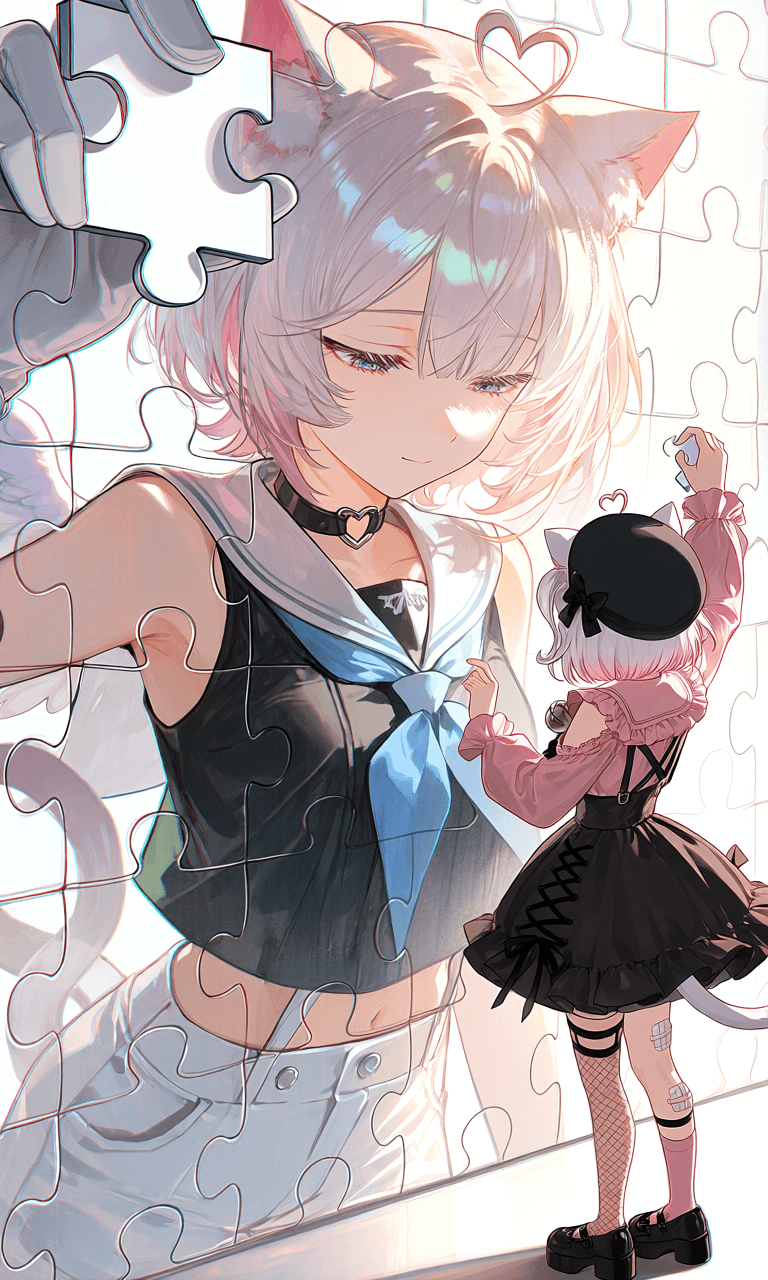
這邊我們用貓娘拼圖的例子,帶你走一遍完整的改圖流程。

第一步:明確目標(你想表達什麼)

從一開始就要明確這張圖的表達目標——不是「好看就好」,而是「要表達什麼關係、什麼情緒」。目標一旦確定,後面所有的選擇都要圍繞它服務。

這張圖想表達的是地雷貓拼著水手貓的畫面,核心意圖是「夢幻 + 童話感」。基調確定後,先選擇符合基調的風格預設,再從中挑選最符合審美的作為最終選擇。

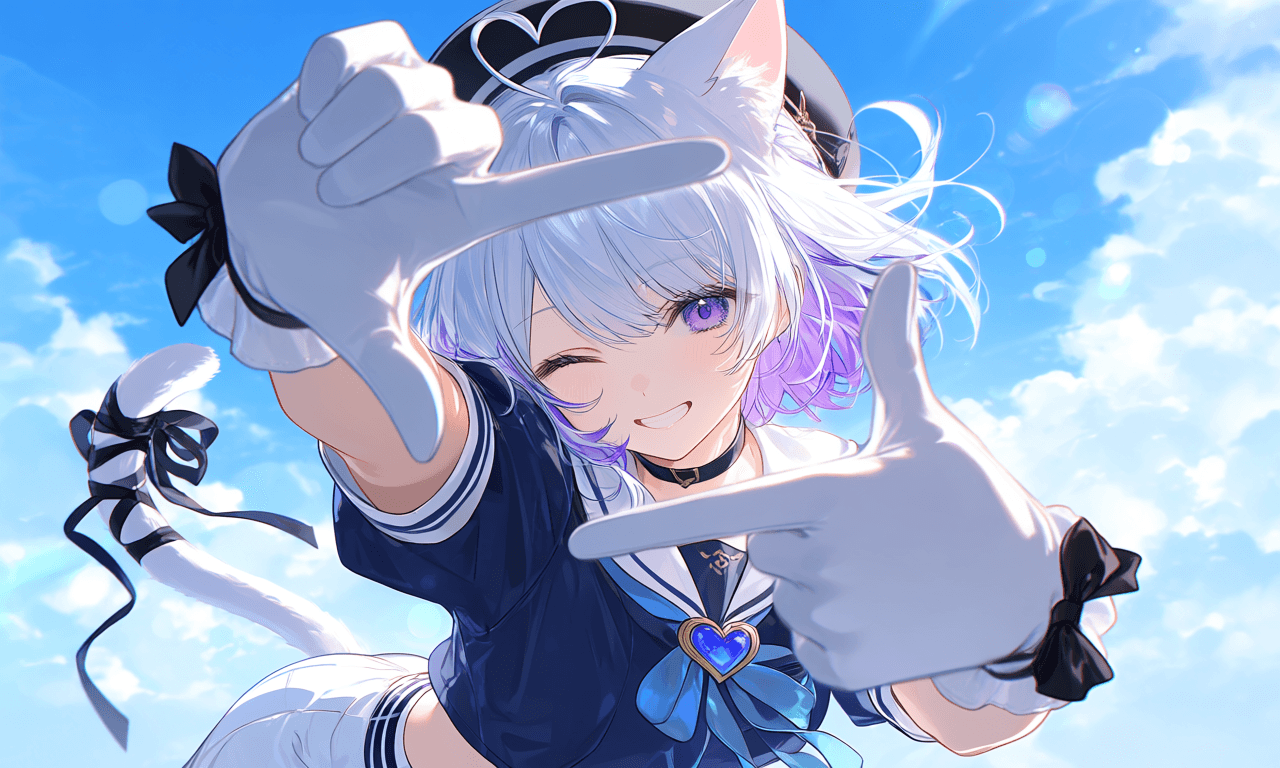
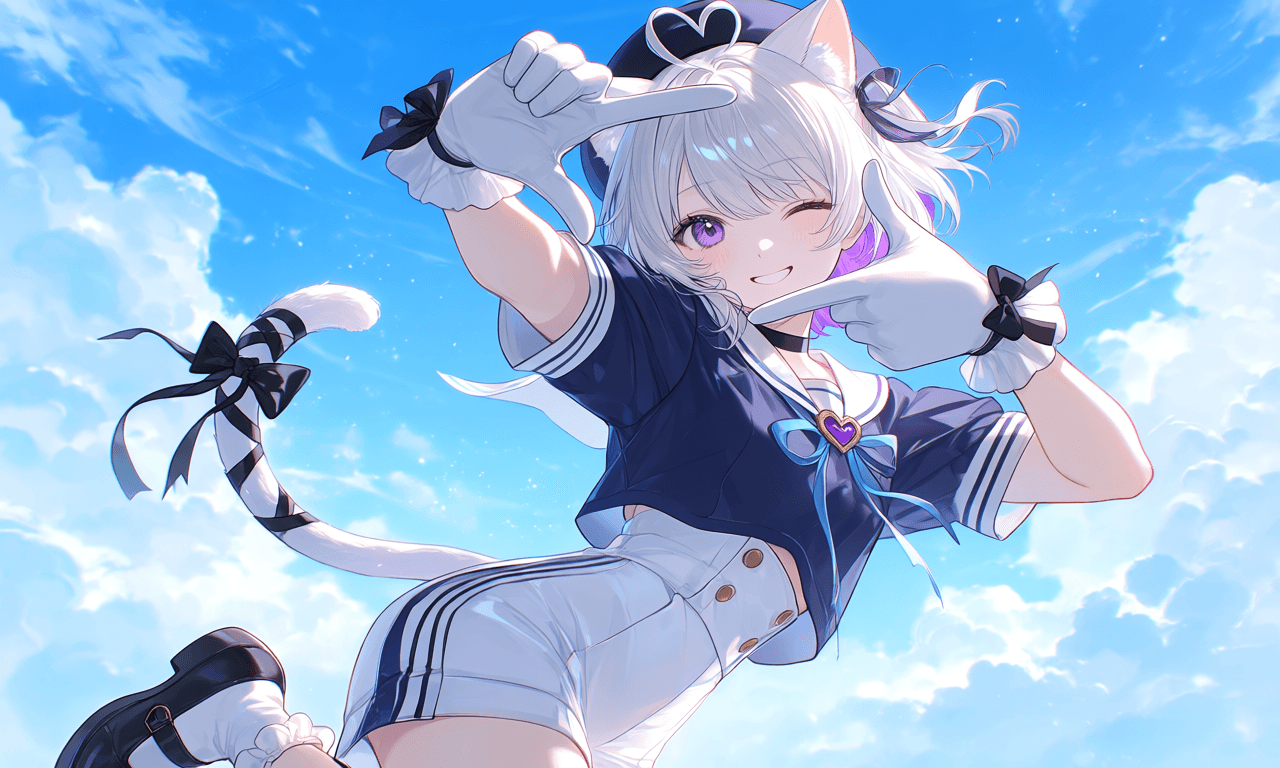
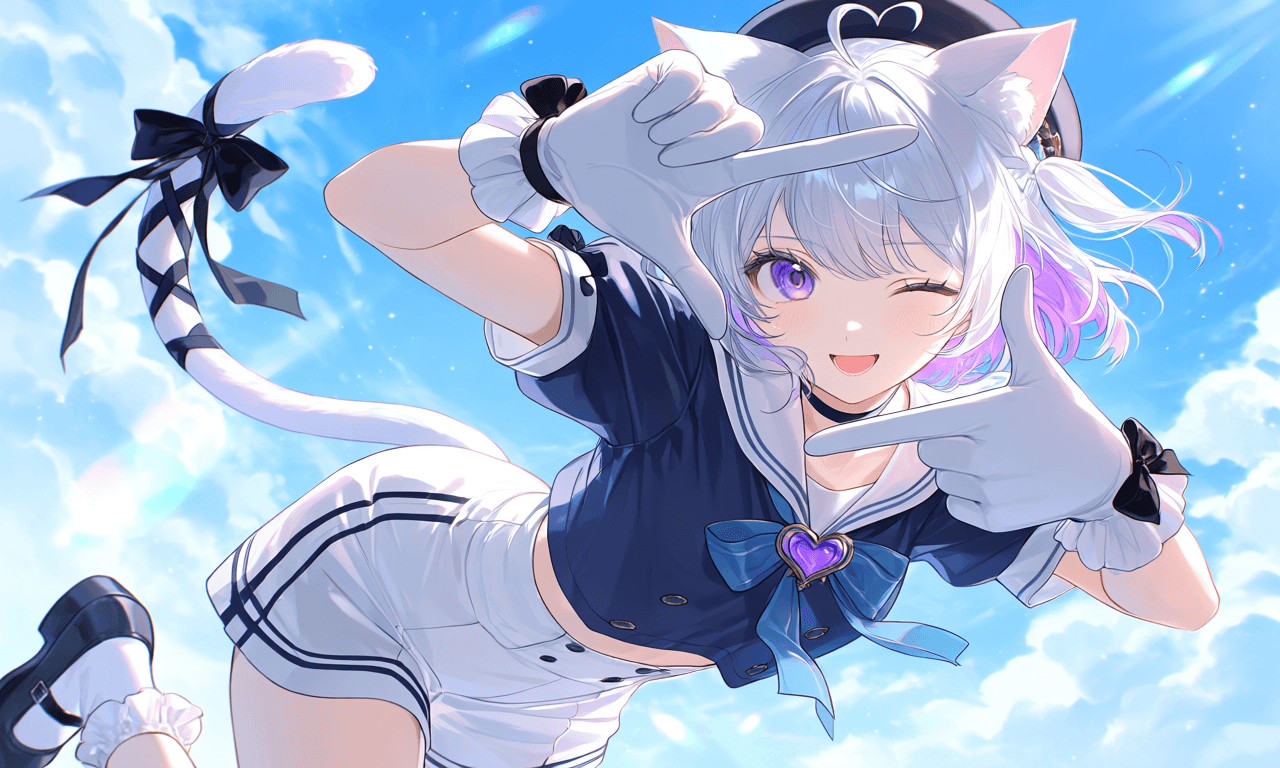
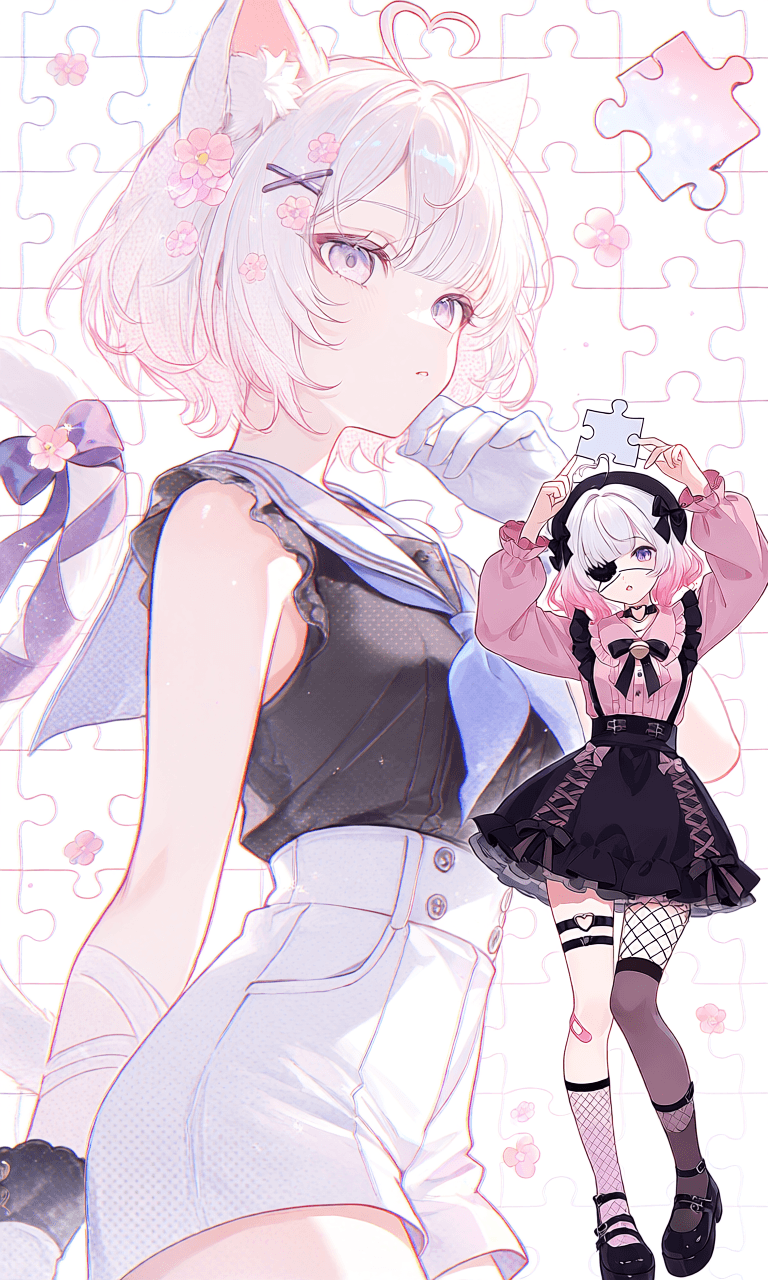
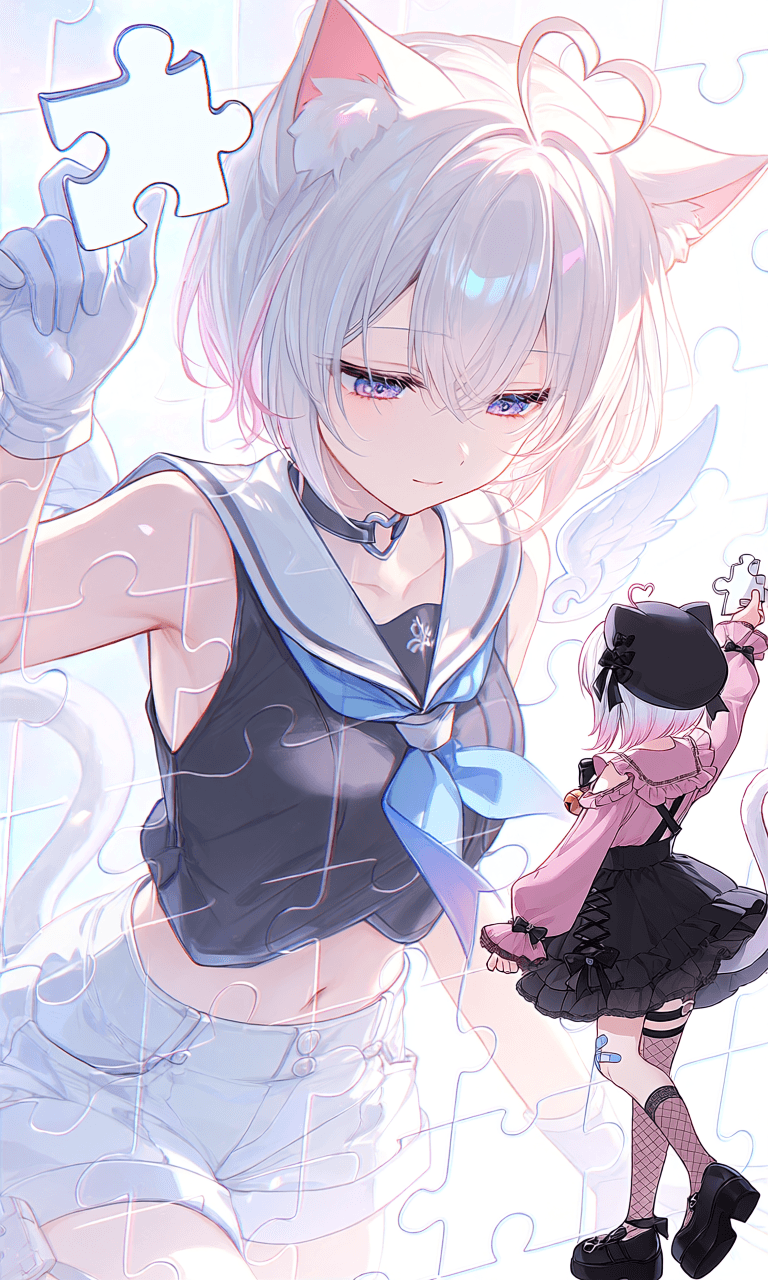
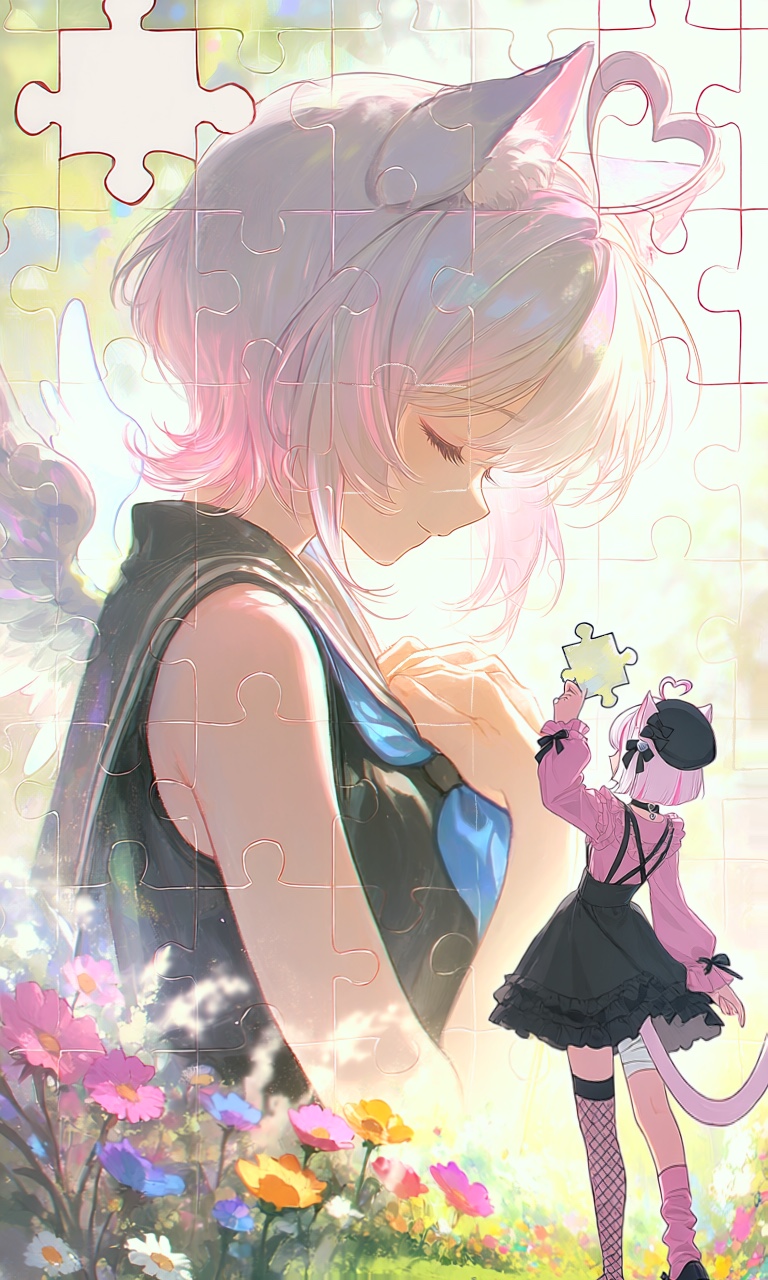
① 經典動畫② 清透夢幻③ 明亮厚塗
Classic Japanese 風格Lucid Dreamy 風格Luminous Impasto 風格

以上三張使用的是同一組提示詞,僅切換了風格預設。

畫風場景角色動作氛圍
複製並跳轉 PixAI
soft light, masterpiece A full illustration covered with a faint jigsaw puzzle template overlay. Puzzle grid lines divide the entire image into pieces, and the first puzzle piece in the top-left corner is missing. The empty slot corresponds to the first piece of the puzzle image. In the lower right corner of the scene stands a very small character interacting with the puzzle, holding the missing piece as if she is about to place it back. Character 1 appears as the image inside the puzzle. She has short white hair blended with pink tones and soft multicolored highlights, with a small heart-shaped ahoge on top of her head. She has cat ears and a cat tail. She has bare shoulders and wears a sleeveless black shirt with a sailor-style collar and a blue neckerchief. She also wears white gloves and high-waisted white shorts that reveal her midriff and navel. She is shown from the upper body only. Her expression is gentle and calm, with her head slightly lowered and her eyes looking downward, showing a faint and peaceful smile. Soft diffused light surrounds her, and a pair of delicate angel wings extend from her back, creating a glowing, dreamlike atmosphere. Character 2 is a much smaller full-body girl standing in the bottom-right corner of the image. She has multicolored gradient hair blending pink and white with a small heart-shaped ahoge. She has cat ears and a cat tail and follows a jirai-kei fashion style. She wears a black beret decorated with bows, a pink frilled collared shirt with puffy long sleeves and lace trim, and a black suspender skirt with layered frills and lace-up details. A ribbon bow and small bell decorate her chest, and she wears a heart O-ring choker. Her legwear is asymmetrical, including thigh-high stockings, fishnet pantyhose, and mismatched socks with thigh straps. Small bandages appear on her leg and knee. She wears black platform Mary Jane shoes. She faces toward the puzzle image with her back turned to the viewer. She raises one arm above her head and holds the missing puzzle piece, as if she is about to complete the puzzle.

第二步:識別衝突(哪裡不對勁)

AI 出圖的問題,很多時候不是模型能力不夠,而是設定本身在互相衝突。常見的衝突類型:

  • 景別與細節衝突:同時提到「臉部特寫」與「高跟鞋」,模型為了塞下兩者,反而畫成全身照
  • 姿勢/方向矛盾:同樣是一個人卻同時出現 standingsitting,模型容易誤以為畫面有兩個人,或讓姿勢扭曲
  • 屬性殘留:想把衣服改成紅色就加了 red dress,但原本的 blue dress 忘了刪掉 —— AI 不知道該畫哪一件
  • 視角擋住情緒:寫 from side(側面)卻又想看清表情,側臉自然就把表情遮掉了

關鍵是找出設定中互相矛盾的地方。回到我們的拼圖例子:

衝突一(資訊衝突): 水手貓身體比例露出太多,視覺分散。

衝突二(構圖衝突): 水手貓與地雷貓「對視」的表述太直白,缺少想像空間。

第三步:調整策略

找到衝突後,重點不是簡單刪詞,而是改變表達策略——保留「想要的感覺」,但換一種更容易實現的方式。

針對衝突一:去掉下半身相關的 prompt(如 white shorts),強調 upper body

針對衝突二:借鑑電影的內省鏡頭(角色不與外界互動),讓水手貓完全側身、閉上眼睛、雙手放在胸口——把「直白表達關係」轉成「透過氛圍讓觀眾自己感受到關係」。

Mio
Mio:

AI 生圖也需要學習很多攝影相關的知識喔!像是景別、構圖、光線方向這些概念,都能幫助你更精準地控制畫面效果。

第四步:強化表達

結構穩定後,再加入細節來強化畫面表現力。如果一開始就堆細節,容易掩蓋結構問題。

為維持童話基調,在背景添加花草。但花草存在感太強,畫面太滿沒有留白——添加 soft bokeh effect 虛化背景,並讓光線更柔和。透過 upper bodyblurry background 重新分配資訊量,讓視覺中心始終落在人物和情緒上。

對比第一步的初始提示詞,最終版在每個層面都做了針對性調整。最終成品如下:

生成結果
畫風場景角色動作氛圍
複製並跳轉 PixAI
soft light, masterpiece A full illustration viewed from the front, covered with a faint jigsaw puzzle template overlay. The puzzle grid lines divide the entire image into pieces, forming a complete puzzle composition. The first puzzle piece in the top-left corner is missing, leaving an empty slot in the puzzle. The puzzle image itself faces directly forward, as if the viewer is looking at the front of a completed puzzle. In the lower right corner of the scene stands a very small girl interacting with the puzzle image, holding the missing puzzle piece above her head as if she is about to place it back. Character 1 appears as the image within the puzzle. She has short white hair mixed with pink tones and soft multicolored highlights, with a small heart-shaped ahoge on top of her head. She has cat ears and a cat tail. She wears a sleeveless black shirt with bare shoulders, a sailor-style collar, and a blue neckerchief. One puzzle piece within the puzzle image is missing around Character 1's mouth area, leaving a puzzle-shaped gap in the image. hands on chest, lower head, light smile, from side, closed eyes. She is shown from the upper body only. Her body and face are turned slightly to the side, shown in a soft side profile rather than facing directly forward. Her head is slightly lowered and her eyes look downward, showing a faint, gentle smile. Behind her, delicate angel wings extend softly, surrounded by diffused glowing light, giving the image a calm and dreamlike atmosphere. Character 2 is a very small full-body girl standing in the bottom-right corner of the illustration. She has a short bob cut hairstyle with multicolored gradient hair blending pink and white and a small heart-shaped ahoge. She has cat ears and a cat tail. Her fashion follows a jirai-kei style. She wears a black beret decorated with bows, a pink frilled collared shirt with puffy long sleeves and lace trim, and a black suspender skirt with layered frills and lace-up details. A ribbon bow and a small bell decorate her chest, and she wears a heart O-ring choker. Her legwear is asymmetrical, including thigh-high stockings, fishnet pantyhose, and mismatched socks with thigh straps. Small bandages appear on her leg and knee. She wears black platform Mary Jane shoes. She faces toward the puzzle image with her back turned to the viewer. She raises one arm above her head and holds the missing puzzle piece, as if she is about to place it into the empty slot of the puzzle. The pastoral background features a summery landscape with vibrant flowers, soft bokeh effect, light and shadow play, delicate textured lines, ethereal dreamlike quality, warm joyful atmosphere, and radiant sunlight filtering through.

這頁對你有幫助嗎?

🎁 被採納的有效建議會獲得 5000 點數獎勵!

本頁內容