PixAIDocs
プロンプト

プロンプト応用

プロンプト応用テクニック —— 構図思考、レイヤー設計、照明や被写界深度の描写で AI アートをワンランク上へ。

AI 画像生成のプロンプト応用テクニック —— 構図思考、レイヤー設計、照明と被写界深度の描写。プロンプト基礎 を一通り終えたあと、多くの人がぶつかるのは「タグがわからない」ではなく 「頭の中に絵がない」 という壁です。本ガイドは構図思考の組み立て方をお伝えし、画像が決まるまでの反復プロセスを丁寧にたどります。タグをすぐ引きたいときは プロンプトチートシート をどうぞ。

モデルによってプロンプトの解釈やデフォルトのスタイルが異なるため、本ページのすべての例は Tsubaki.2 をモデルに使い、プロンプトヘルパーを OFF にして生成しています —— 生のプロンプトの効果がそのまま見えるようにするためです。別のモデルを使ったり、プロンプトヘルパーを ON にしたりすると、結果が変わることがあります。


画像をイメージする

書き始める前に、いきなりディテールに飛び込まないこと。まずはテーマの周りに「筋の通った世界」を組み立てましょう。

このプロセスは、3 つの問いに答える作業に集約できます:

この世界には何があるか(要素)→ 何が起きているか(動作と変化)→ どこまで見せるか(ショットの種類)

例:「春」から組み立てる

Step 1:テーマ → 環境要素を選ぶ(「何があるか」)

テーマから、最も連想を喚起するシーン要素を挙げます。「春」と聞けば花や草が浮かびます —— これがベースになり、画像全体の感情のトーンを決めます。

Step 2:環境 → キャラクターの状態を導き出す(「ここで人は何をするか」)

キャラクターをこの環境にどうなじませるか?シーンが草地なので、リラックスした春の空気感では 立つよりも座る方が自然 です。動作は環境から自然に派生させ、単独で発想しないこと。

Step 3:変化要素を加える(絵を生き生きさせる)

完全な静止は単調に見えます。風を変化要素として加えてみましょう —— 風があれば花も草も動き、シーン全体の動きの論理が一貫します。風があるなら髪も動くはず、そこからより具体的な動作が生まれます:風になびく髪を片手で押さえる。これで動作はただの飾りではなく、環境に対する論理的な反応になり、キャラと景色が因果でつながります。

Step 4:ショットコントロール → 情報量の配分を決める

「草原の広がり」を伝えたいなら、環境に呼吸する余地が要ります —— キャラに画面いっぱいを取らせるよりも、引いたショットを選びましょう。このステップは要するに情報の配分、つまり「環境とキャラ、どちらをどれだけ見せるか」を決める作業です。
Mio
Mio:

テーマを起点に、上から順に組み立てましょう:まず シーンの土台 を固め、環境からキャラの 状態と動作 を導き出し、変化要素で静寂を破り、ショットの種類 で情報量を配分する。

画面を切り取る

切り取りの中心はショットの種類 —— キャラと環境の比率を決める、最も基本的な構図判断のひとつです。代表的なショットは以下のとおり。

ショット種別メモ
指定なし指定なし指定しない場合、モデルが最適と思う構図を選びます。
ミディアムミディアム概ね腰から上で、キャラと環境のバランスが取れたショット。最も日常的で安定したナラティブの画角 —— 会話、対話、軽い感情の見せ場に適しています。
カウボーイカウボーイミディアムの派生で、ボディランゲージの余地を残しつつキャラに焦点を寄せるショット。「キャラの状態 + ちょっとした存在感」を出したいときに。
ワイドワイド最も引いた画角 —— キャラは小さく、環境が画面を支配します。主役は人ではなく、その場所であること。設定や文脈を提示するのに向いています。
クローズアップクローズアップ環境を後退させ、視線を自然にキャラの表情・目・手に向けさせるショット。
チョーカーチョーカー顔だけ、ときには顔の一部だけ —— 環境はほぼ消えます。情報を伝えるのではなく、感情を増幅させる ためのショット。インパクトは強いが、多用するとテンポが崩れます。

縦横:ポートレート vs ランドスケープ

アスペクト比も構図の一部で、何を切り取るかで適切な選択が変わります:

  • ポートレート(縦) —— キャラ作品 に最適。縦の伸びで全身を頭から足まで収め、表情や感情がはっきり読めます
  • ランドスケープ(横) —— シーン作品 に最適。横の広がりで環境・地平線・奥行きが入ります

被写体がキャラなら → 縦。被写体がシーンなら → 横。本当に主役にしたいものを決めて、比率を選びましょう。

画像を改善する

すでに生成しているけれど、思ったとおりにならない?モデルのせいとは限りません —— しばしば プロンプト自身が衝突している のです。修正の基本ループ:

トーンを決める → 矛盾を見つける → 表現を調整する → ディテールを足す

ここでは、ジグソーパズルを完成させる猫娘の例で、修正フローをたどってみます。

Step 1:目標を定義する(何を表現したいか)

最初から、この絵で伝えたいことを言語化してください —— 「綺麗」ではなく「どんな関係性、どんな感情を伝えたいか」。目標が明確になれば、以降のすべての判断がそれに奉仕する形になります。

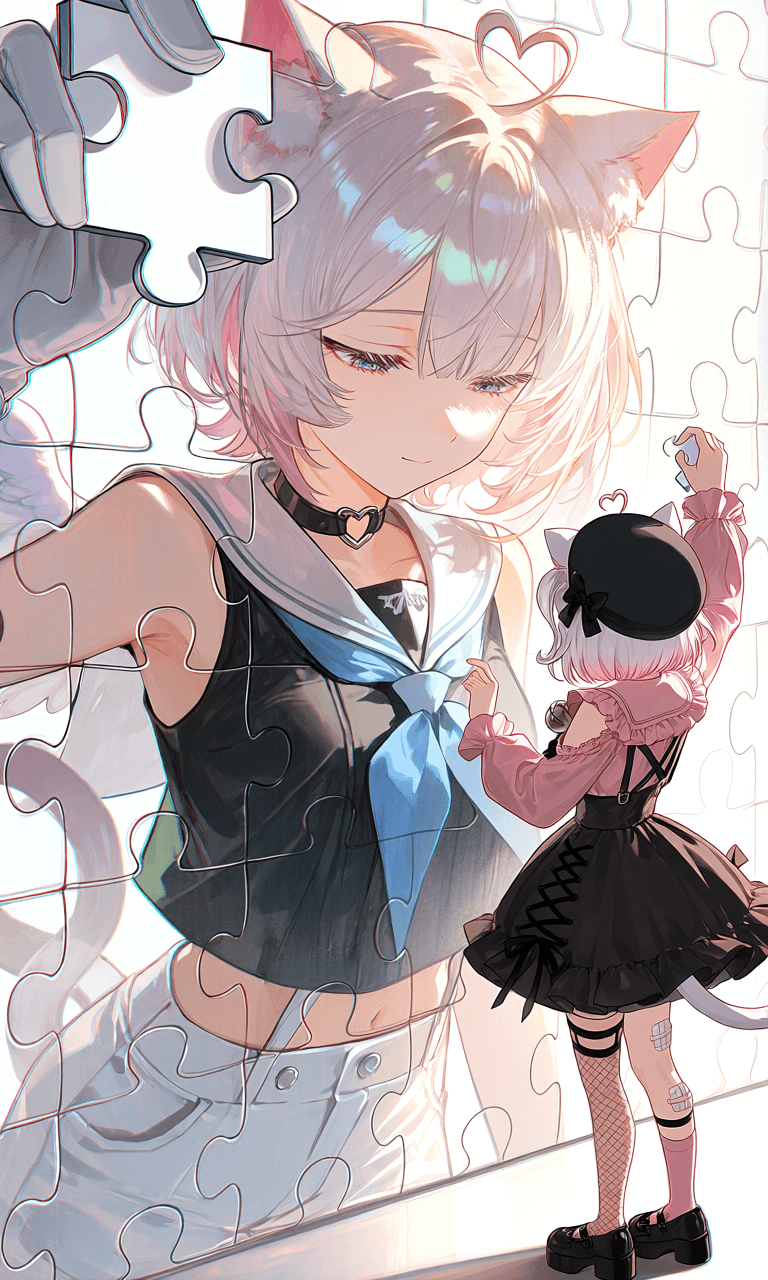
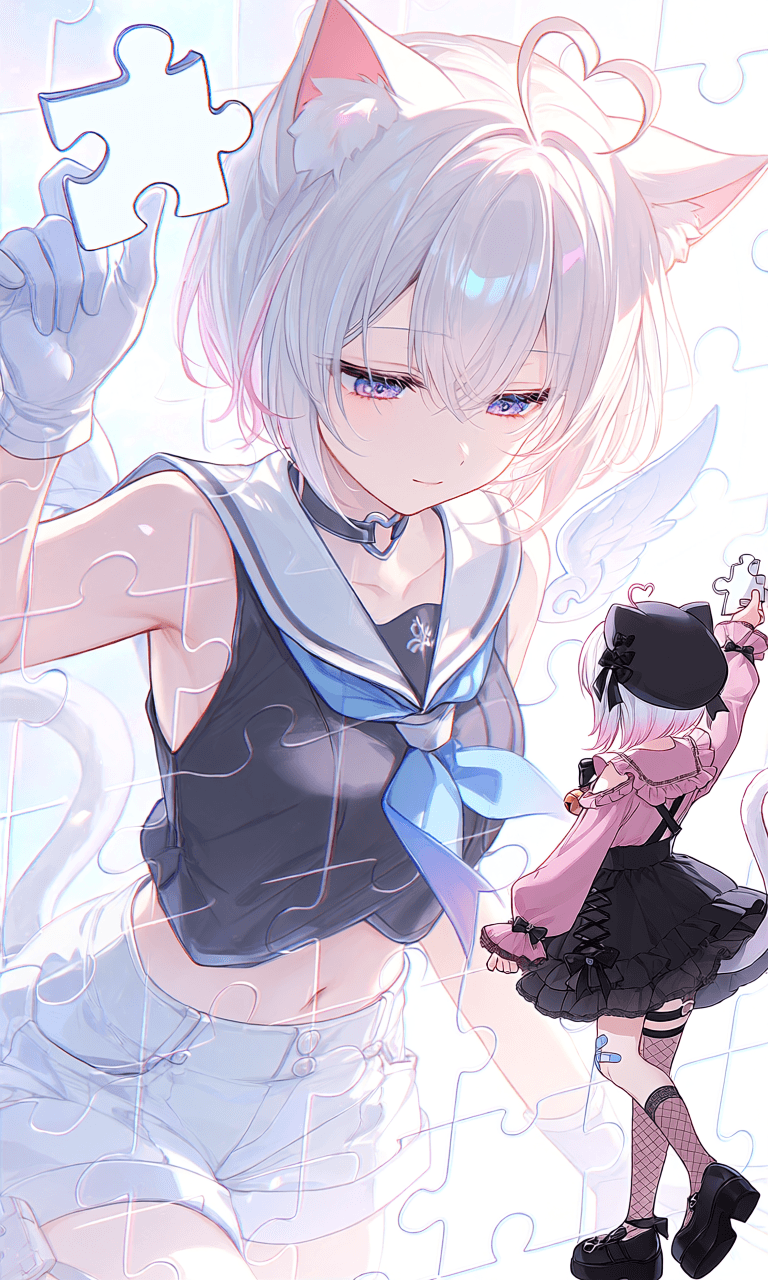
この絵では、地雷系の猫娘がセーラー服の猫娘パズルにピースを差し込もうとする瞬間を捉えたい。コアの意図:夢のような・絵本のような世界観。トーンが決まったら、それに合うスタイルプリセットを選び、その候補から好みのものを採用します。

1. クラシックアニメ2. 透明感ドリーミー3. ルミナス厚塗り
クラシック日本風透明感ドリーミールミナス厚塗り

上の 3 枚は 同じプロンプト を使い、スタイルプリセットだけ切り替えたものです。

画風シーンキャラクターポーズ雰囲気
コピーして PixAI へ
soft light, masterpiece A full illustration covered with a faint jigsaw puzzle template overlay. Puzzle grid lines divide the entire image into pieces, and the first puzzle piece in the top-left corner is missing. The empty slot corresponds to the first piece of the puzzle image. In the lower right corner of the scene stands a very small character interacting with the puzzle, holding the missing piece as if she is about to place it back. Character 1 appears as the image inside the puzzle. She has short white hair blended with pink tones and soft multicolored highlights, with a small heart-shaped ahoge on top of her head. She has cat ears and a cat tail. She has bare shoulders and wears a sleeveless black shirt with a sailor-style collar and a blue neckerchief. She also wears white gloves and high-waisted white shorts that reveal her midriff and navel. She is shown from the upper body only. Her expression is gentle and calm, with her head slightly lowered and her eyes looking downward, showing a faint and peaceful smile. Soft diffused light surrounds her, and a pair of delicate angel wings extend from her back, creating a glowing, dreamlike atmosphere. Character 2 is a much smaller full-body girl standing in the bottom-right corner of the image. She has multicolored gradient hair blending pink and white with a small heart-shaped ahoge. She has cat ears and a cat tail and follows a jirai-kei fashion style. She wears a black beret decorated with bows, a pink frilled collared shirt with puffy long sleeves and lace trim, and a black suspender skirt with layered frills and lace-up details. A ribbon bow and small bell decorate her chest, and she wears a heart O-ring choker. Her legwear is asymmetrical, including thigh-high stockings, fishnet pantyhose, and mismatched socks with thigh straps. Small bandages appear on her leg and knee. She wears black platform Mary Jane shoes. She faces toward the puzzle image with her back turned to the viewer. She raises one arm above her head and holds the missing puzzle piece, as if she is about to complete the puzzle.

Step 2:矛盾を見つける(何がうまくいっていないか)

AI 画像の問題のほとんどはモデルの限界ではなく、プロンプトの設定がぶつかり合っていることが原因です。よくある矛盾の種類:

  • ショット vs ディテールの衝突:「顔のクローズアップ」と「ハイヒール」の両方を要求 → モデルが両方を収めようとして、結局フルショットになる
  • ポーズ/向きの矛盾:1 人なのに standingsitting が両方ある → モデルが 2 人と解釈したり、ポーズが歪んだり
  • 属性の取り残し:ドレスを赤に変えるつもりで red dress を足したけど、元の blue dress を消し忘れ → AI はどちらを描けば良いかわからなくなる
  • アングルが感情を遮るfrom side と書いたのに表情をはっきり見せたい → 横顔は構造的に表情を隠してしまう

ポイントは、プロンプト内で何が衝突しているかを特定すること。パズルの例に戻りましょう:

矛盾 1(情報の衝突): セーラー猫娘の身体露出が多すぎて、視線が散ります。

矛盾 2(構図の衝突): セーラー猫娘と地雷猫娘が「目を合わせる」と言ってしまうと、説明過多 —— 視聴者の想像の余地がなくなります。

Step 3:表現を調整する

矛盾を見つけたら、単に語を消すのではなく、同じ意図をどう表現するかを変えること。出したかった感情を保ったまま、より楽な伝え方を探します。

矛盾 1:下半身に関するプロンプト(white shorts など)を削除し、upper body を強調。

矛盾 2:シネマティックな 内省ショット(キャラが外に向かい合わない構図)を借ります —— セーラー猫娘を完全に横向きにして、目を閉じ、両手を胸の前に置きます。「関係性を言葉で説明する」から「雰囲気で匂わせる」への転換です。

Mio
Mio:

AI 画像生成は写真の知識を活かせます!ショットの種類、構図、ライティングの方向といった概念を意識すると、結果のコントロール度が一気に上がります。

Step 4:表現を強化する

構造が固まったら、ディテールを足してさらに磨いていきます。早すぎる段階でディテールを盛ると、構造の問題を覆い隠すだけになります。

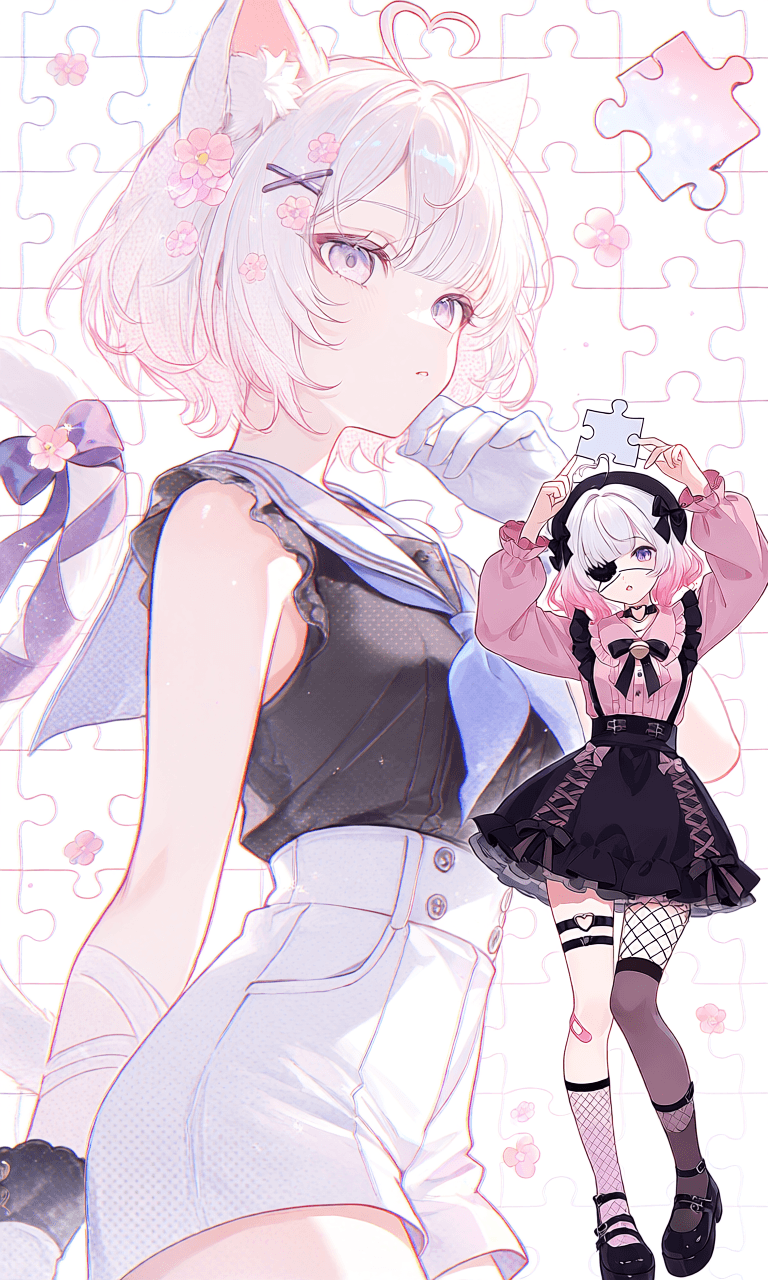
絵本のトーンを保つために、背景に花や植物を加えました。ただし主張が強すぎ、画面が窮屈で呼吸する余地がありません。soft bokeh effect を加えて背景をぼかし、ライティングをやわらかくします。upper bodyblurry background で注意の配分を整え、視覚の中心をキャラと感情に置き続けます。

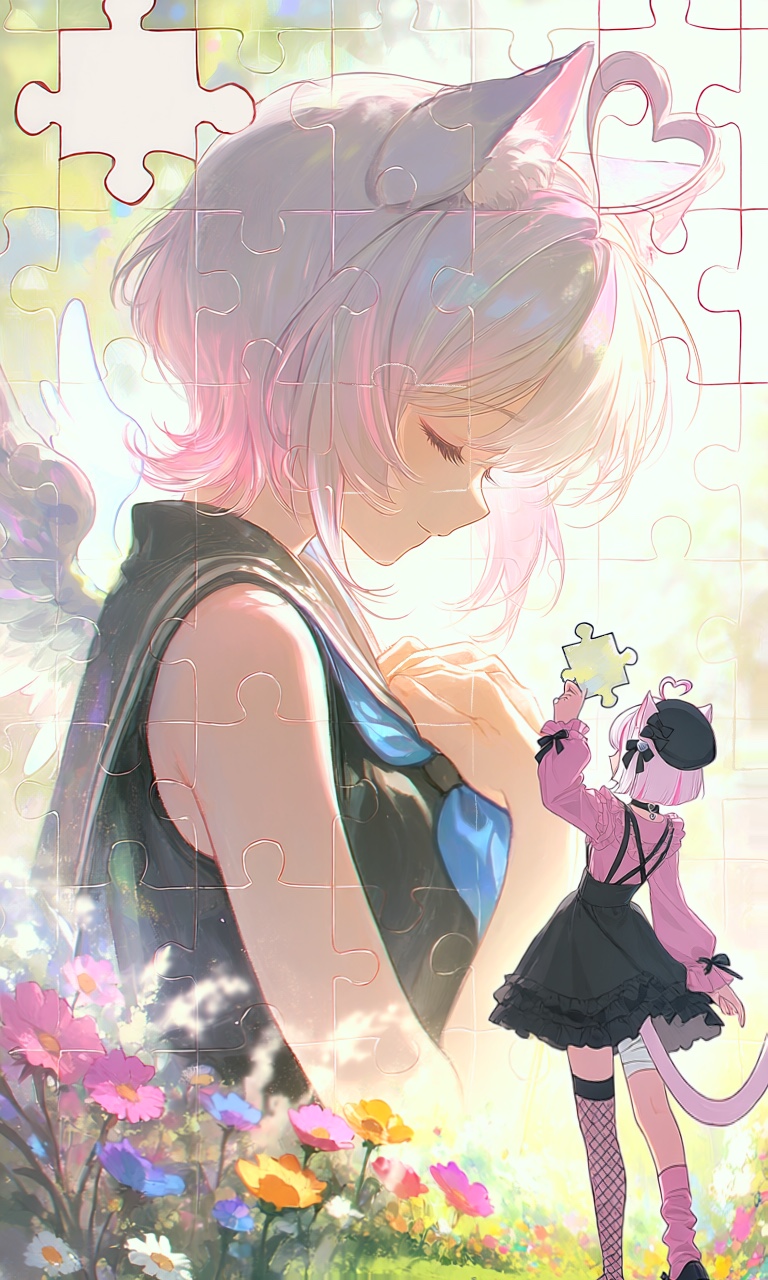
Step 1 の初期プロンプトと比べると、最終版は各レイヤーで的確な調整が入っています。最終結果:
生成結果
画風シーンキャラクターポーズ雰囲気
コピーして PixAI へ
soft light, masterpiece A full illustration viewed from the front, covered with a faint jigsaw puzzle template overlay. The puzzle grid lines divide the entire image into pieces, forming a complete puzzle composition. The first puzzle piece in the top-left corner is missing, leaving an empty slot in the puzzle. The puzzle image itself faces directly forward, as if the viewer is looking at the front of a completed puzzle. In the lower right corner of the scene stands a very small girl interacting with the puzzle image, holding the missing puzzle piece above her head as if she is about to place it back. Character 1 appears as the image within the puzzle. She has short white hair mixed with pink tones and soft multicolored highlights, with a small heart-shaped ahoge on top of her head. She has cat ears and a cat tail. She wears a sleeveless black shirt with bare shoulders, a sailor-style collar, and a blue neckerchief. One puzzle piece within the puzzle image is missing around Character 1's mouth area, leaving a puzzle-shaped gap in the image. hands on chest, lower head, light smile, from side, closed eyes. She is shown from the upper body only. Her body and face are turned slightly to the side, shown in a soft side profile rather than facing directly forward. Her head is slightly lowered and her eyes look downward, showing a faint, gentle smile. Behind her, delicate angel wings extend softly, surrounded by diffused glowing light, giving the image a calm and dreamlike atmosphere. Character 2 is a very small full-body girl standing in the bottom-right corner of the illustration. She has a short bob cut hairstyle with multicolored gradient hair blending pink and white and a small heart-shaped ahoge. She has cat ears and a cat tail. Her fashion follows a jirai-kei style. She wears a black beret decorated with bows, a pink frilled collared shirt with puffy long sleeves and lace trim, and a black suspender skirt with layered frills and lace-up details. A ribbon bow and a small bell decorate her chest, and she wears a heart O-ring choker. Her legwear is asymmetrical, including thigh-high stockings, fishnet pantyhose, and mismatched socks with thigh straps. Small bandages appear on her leg and knee. She wears black platform Mary Jane shoes. She faces toward the puzzle image with her back turned to the viewer. She raises one arm above her head and holds the missing puzzle piece, as if she is about to place it into the empty slot of the puzzle. The pastoral background features a summery landscape with vibrant flowers, soft bokeh effect, light and shadow play, delicate textured lines, ethereal dreamlike quality, warm joyful atmosphere, and radiant sunlight filtering through.

このページは役に立ちましたか?

🎁 採用された有効なご提案には5,000クレジットを進呈します!

目次